
EUPHEMISMS PROMOTED
- They allow entry through code, fingerprint, phone app or key.
- Administration and remote access: They allow you to check the house, make adjustments or Close/unlock the doors from anywhere in the world over the phone.
- Guest management: They allow you to create temporary digital keys with maturity for delivery drivers, guests, etc., without the need to deliver physical keys.
- Activity records: They allow you to check who entered and when (e.g.: nanny monitoring, cleaners or family members).
- Auto-Lock: Can be programmed for self-locking after a set time.
PROVEN FACTS
- Cybersecurity risks and software vulnerabilities
- Bluetooth/Wi-Fi Vulnerabilities: Certain smart locks have weak encryption or replay attack vulnerabilities where they can be recorded and forward signals to unlock.
- Brute Strength Attacks: If a lock uses a numeric keyboard without a deadline function, it can be vulnerable to guessing attacks (however it is touted that most modern locks have anti-tamper features).
- Cloud server breaks: If cloud-based access is used, gaps in the manufacturer's server could potentially expose user data or allow them to unlock remotely to third parties.
- The Application doesn't work: App Accidents, it won't show the status or records that aren't being updated.
- False alarms or unwanted notifications: Locks descend randomly, too many alerts.
- Reliability points and failure
- Depends on the battery: Battery levels should be monitored regularly. Some locks require a 9V battery start through external terminals, if batteries die completely. This makes it difficult to manage, as not all users know how to perform these boot procedures. In addition, if the case of exhausted batteries occurs and there is no reserve power supply or a physical key, the user can be blocked.
- Traffic jam problems: The blockage is not done properly (Jammed or misaligned). The engine works but does not block, the bolt does not fully extend. Cheap engines can get stuck if the door isn't perfectly aligned, leaving it stuck outside.
- Wi-Fi/Bluetooth Departures: If the home network falls, remote access stops working. Bluetooth proximity unlocking can also fail if the phone's Bluetooth is glitchy.
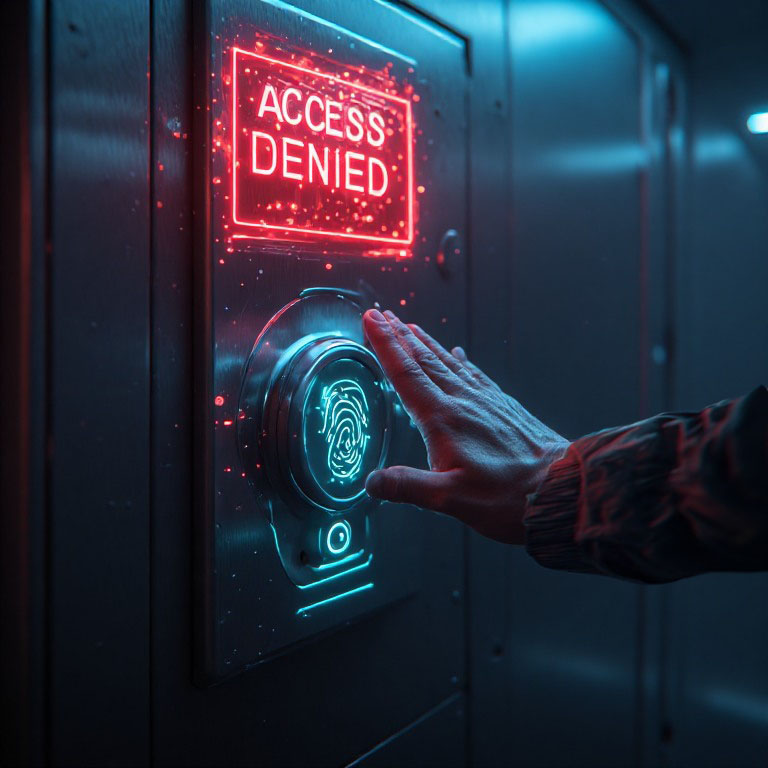
- Keypad or fingerprint scanner doesn't answer: Codes can be rejected, fingerprints may be unrecognized, leaving users locked.
- Mechanical failure: Electronic components may fail due to sudden changes in temperatures or due to waves of energy.
- Practical and financial disadvantage
- Installation Complexity and Compatibility Problems: Not all doors work or are compatible with smart locks. Some require professional installation, bolt adapters, or specific door frames.
- Resale/Rental: Owners can ban them; remove them when leaving and leave holes that require door replacement.
- Patented ecosystems: Some systems only work exclusively within the application of a specific brand, limiting its flexibility.
- Cost: High-quality and reliable smart locks are significantly more expensive than standard mechanical locks.
PRIVACY COMPROMISED
What specific data do you collect?:
- Access logs: Times-tamps and user identities (e.g., "Operated door user at 8:00 AM").
- Authentication Methods: If a code, fingerprint, facial identification, or key was used.
- Hardware health: Battery levels, engine torque data and firmware versions.
- Location data: GPS coordinates (if it is Wi-Fi-based) to verify that you are at home for remote unlocking.
- Voice commands: If integrated with Home Applications belonging to corporations; they record fragments of voice triggered by words of wake.
What is the destination of the information and data collected?:
- Monitoring: To generate alerts of unusual activity (e.g. "Dawn unlocked 10 times in 1 minute").
- Analytics: The aggregate data provide you with information to improve your designs.
- Cloud security copy: Storage records allow you to access the history from any device, not just those paired locally.
- Use shared with Third Parties: Many manufacturers share and/or sell "anonymous behavioral data," (use data and private user information) with advertisers, data brokers or insurance companies.
Data flow
| Devise | Primary data collected | Use shared with Third Data collected | Other Privacy risks |
| "Smart" Lock | Access times | Manufacturer, Police | Hacking/ Remote unlocking |
"Smart" Locks
Reference:
https://homediyautomation.com/smart-lock-troubleshooting-maintenance-guide-resolve-issues/
https://www.btelec.com/news/troubleshooting-common-smart-lock-issues-essential-after-sales-guide/
https://www.oliphantlock.com/blog/smart-lock-not-working-heres-what-to-do
